
“Have you ever negotiated a purchase agreement with a seller who was in jail and using a jail phone?” Grant asked the lawyer. “Virtual meetings? Yes. Jail phone? No.” the lawyer said. It was an unusual medium to negotiate the purchase of a life insurance company but that’s how Axar’s eventual purchase of Revol One Insurance Company (“Revol One”), FKA Pavonia Life Insurance Company of Michigan (“Pavonia”), started in the summer of 2022.
Axar’s journey to acquire the Pavonia platform was a long one, not atypical for the firm whose sourcing strategy involves a lot of “hanging around the hoop” until a window of opportunity opens.
Greg Lindberg’s (the owner/seller of Pavonia) indictment by a federal grand jury in early 2019 began a
long (and still ongoing) liquidation process for many of his assets including Pavonia.
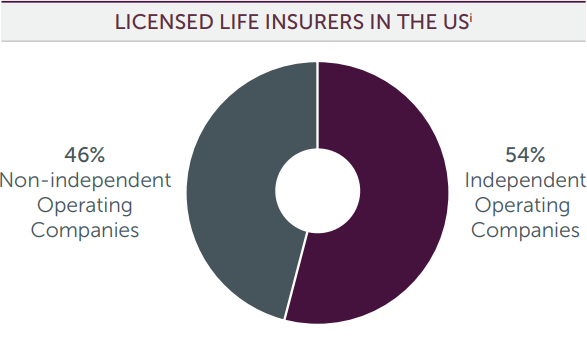
There are significant barriers to entry in the US life insurance industry. Although there are 730 licensed life insurers in the US, fewer than 400 are truly independent operating companiesi. In an industry that requires individual state licensing, some of which may take years before approval (if at all), the existing platform or the “bones” of an insurance company may represent significant value. Attractive life insurance platforms are scarce and when sold, they attract a lot of attention. In one transaction during 2023, Axar understands over 30 bidders participated and nearly all were alternative asset managers.
The process of acquiring a regulated insurance company is burdensome and time consuming (even when the Company is not distressed or in state receivership like Pavonia was); the prospective acquirer must endure extensive background checks including audits of their personal financial statements, provide highly detailed business plans, provide capital commitments and receive the approval of every state regulator in which the business is licensed (in Pavonia’s case, that is 49 separate approvals). The process may take a year or longer to complete for even the most pristine applicants. Lindberg, jailed with his assets frozen, with limited liquidity and facing mounting legal bills, attempted to sell Pavonia beginning in 2019.
The Michigan Department of Insurance and Financial Services (“DIFS”), Pavonia’s primary regulator, approved the sale but proactively placed Pavonia into voluntary “rehabilitation”. Typically reserved for insolvencies, Pavonia, despite a profitable history dating back to 1980 and strong levels of capitalization, found itself in rehabilitation due to its relationship with the troubled Lindberg. This predicament created a legal paradox as the company had equity value, but the owner of the equity had no control over the company whatsoever; the situation was novel and there was no prior case law to clearly delineate the authorities of DIFS and Lindberg.
AXAR IDENTIFIES AN OPPORTUNITY
Axar watched Lindberg’s legal issues unfold from afar and identified Pavonia as an attractive asset within his portfolio. Several situational dynamics played to Axar’s strengths including investing in defaulted debt that was secured by the equity of Pavonia (a bridge loan that Lindberg had received in 2019), negotiating with a challenging counterparty, understanding regulated financial services companies, regulator relations and familiarity with bankruptcy-like processes.
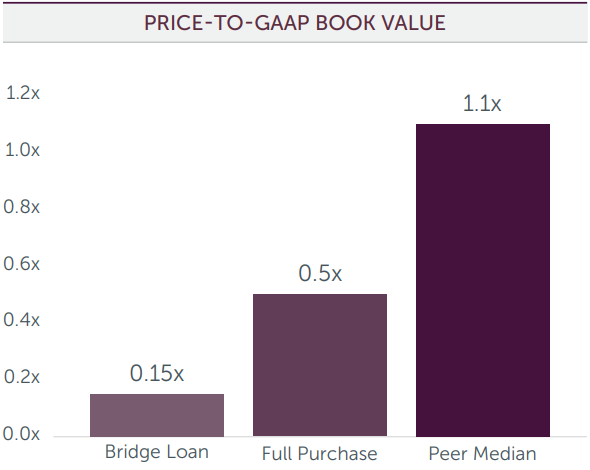
Axar recognized a unique opportunity and showed it to an affliate who acquired the bridge loan, an attractive investment due to significant overcollateralization and a 15% default interest rate. The bridge loan was only $25mm, Pavonia had roughly 6x that value in GAAP book value (a creation value of 0.15x price-to-book value compared to comparablesii at >1.0x). There were nearly $1bn in assets, 49 state licensesiii and a business that was previously profitable.
Two months later, Axar signed a purchase agreement with Lindberg to fully acquire Pavonia.
In the years leading up to the Pavonia investment opportunity, Axar developed a relationship with Mark Zesbaugh, the former CEO of Allianz North America, the largest life insurance company in the US during his tenure. Mark was interested in working with an investment firm on a life insurance opportunity and worked with Axar on a different unsuccessful insurance opportunity prior to Pavonia surfacing. The Pavonia situation intrigued Mark, so he agreed to partner with Axar on the investment underwriting and to play an active role in the future board/management.
Pavonia had a unique set of liabilities, nearly 75% of its reserves were structured settlements, a niche annuity product that comprises less than 2% of annual annuity volume. Here Axar also had a unique angle; Axar owned JG Wentworth, the largest purchaser of secondary-market structured settlements in the US. Axar was able to leverage its expertise from JG Wentworth to underwrite these esoteric liabilities.
The asset side of the balance sheet was straightforward; DIFS hired Goldman Sachs Asset Management and reallocated 100% of the assets into highly liquid, highly rated corporate bonds. With the support of JG Wentworth and assistance from the former CEO of Allianz North America, Axar underwrote its investment in Pavonia and the ability to successfully remove the Company from state receivership.
The Pavonia platform featured several attractive attributes. It had nearly $1bn of assets providing scale and profitability, seasoned liabilities that could be confidently underwritten and, although in run-off since 2012, active licenses in 49 states, potentially allowing it to write new business nationwide. The active state licenses were key to Axar’s investment thesis; insurance distribution is a scale game and most effciently executed nationwide.
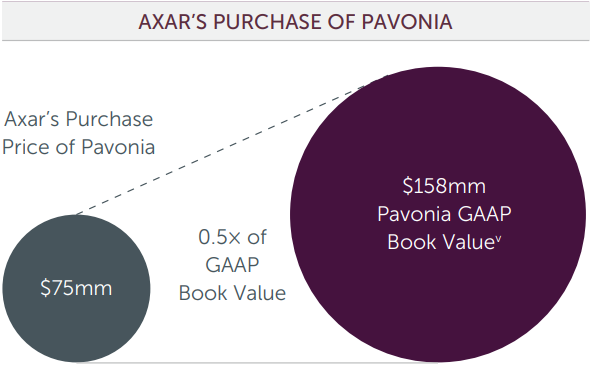
Axar’s $75mm purchase price represented less than 0.5× of GAAP book value, an attractive valuation as comparablesiv had historically traded at >1.0×; Axar believed that was the normalized private market value for the business. While other potential buyers waited on the sidelines for the sale process to commence, Axar proactively created the discounted purchase opportunity via the defaulted bridge loan. The speed at which Axar moved coupled with the understanding of how the various pieces of the puzzle could come together (defaulted loan, rehabilitation, di cult seller who was now incarcerated, understanding of insurance) created a strong position for Axar.
After nine months of regulatory review, Axar received approval to acquire Pavonia and closed on September 15, 2022.
SIGNIFICANT PLATFORM POTENTIAL
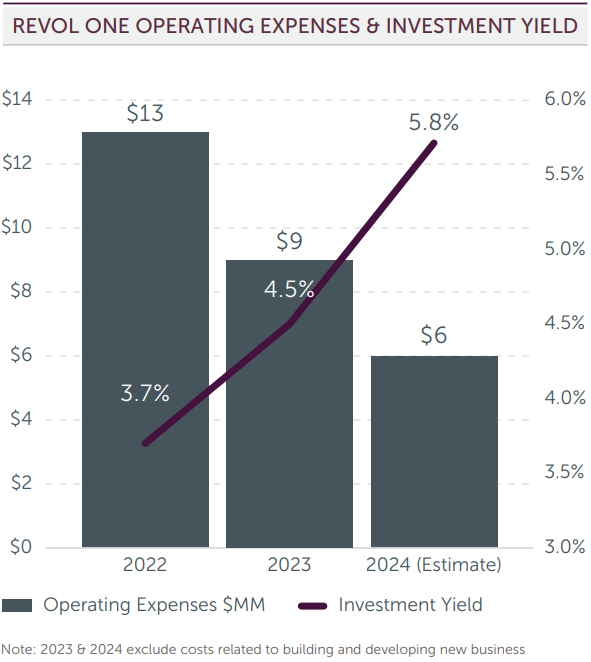
Axar acquired a unique life insurance platform, but the work was not done. Pavonia languished in rehabilitation for three years without the benefit of a profit-seeking owner controlling operations; liabilities had decreased while expenses materially increased, operations were fully outsourced to expensive third parties, there were now no employees or offi ces and the assets were invested too conservatively to generate su cient investment yields.
In the months leading up to closing, Axar worked closely with Mark Zesbaugh to establish a business plan first to address the operational issues and second to build a life insurance franchise on the existing Pavonia platform.
The first priority was internalizing operational resources; Axar and Mark quickly negotiated the acquisition of a team of eight individuals (from the primary third-party service provider) to manage accounting, finance, reporting, tax, etc. Next, the exit of several unprofitable lines of business was put in motion. There were other administrative items to address: the Canadian branch hadn’t been audited in three years putting it out of regulatory compliance because no auditor would work with a convicted felon, several states suspended licenses given Lindberg’s felon status and banks would not engage in business with Pavonia due to KYC issues with Lindberg, etc. To shed the Lindberg baggage, Pavonia was renamed Revol One Insurance Company (think Revolution).
By Summer 2023 Revol One had fully in-sourced its operations, was generating positive net income, completed audits, reinstated licenses and exited unprofitable businesses. Revol One now had 15 employees including a CEO, CFO, COO and CIO. Given this rapid success, Axar considered a monetizon. However, Axar recognized that life insurance businesses with robust premium origination capabilities and high ROEs transacted at higher multiples, in some cases significantly above the peer median.vi
THE GROWTH OPPORTUNITY
“The good news is we have no technology. The bad news is we have no technology.” Mark said during a board meeting in the summer of 2023. Revol One had been in runo since 2012, the legacy technology and originations capabilities had long been idled; new technology would need to be licensed and integrated from scratch to start writing new premium. In this sense, Revol One was a start-up.
Axar used the newfound profitability of the base Revol One business as the seed capital for a low-risk growth plan that had the potential to significantly increase exit valuation. To reduce execution risk, vendor, technology and other new business contracts were structured to have short tails (less than two years) allowing for a low-cost exit should the new business efforts struggle.
A key competitive advantage would be the ability to license the latest cutting-edge insurance software and not be burdened by legacy systems. In less than one year, the team implemented a completely new technology system to manage premium writing, accounting, administration, customer service, agent onboarding, product pricing, etc. and Revol One believes this technology platform represents a significant competitive advantage as it will allow for greater ease and speed of doing business.
The last piece was a rating from AM Best and Revol One received a B++ investment grade rating in March 2024.
With a new leadership team assembled, cutting-edge technology and underwriting capabilities and a strong rating from AM Best, Revol One wrote its first new insurance policy since 2012 in April 2024.
THE THESIS IS PLAYING OUT
Insurance is a capital-intensive business and capital is required to fund prudent growth. Revol One benefits from excess capital and ongoing profitability but to accelerate the new business goals, third-party capital would be required.
In February 2024, a commercial real estate focused asset manager approached Axar regarding a minority, non-control equity capital investment into Revol One in exchange for the management of certain real estate assets. Excited by the potential in the Revol One platform, they saw an opportunity to be an early partner in Revol One’s growth. After several months of negotiation and approximately 18 months after the original acquisition of Revol One, Axar closed on a new $20mm equity investment at a $120mm valuation, approximately 1.6x the initial purchase price of $75mm.
Looking forward, Revol One will continue to execute on its growth plans and Axar will continue to evaluate strategic equity partnerships and an ultimate exit. By mid-2025, assuming Revol One continues to hit business milestones, it expects to be writing nearly $1bn of premium annually, which would make the Company a top 40 annuity underwriter in the US.
The progress of the Revol One investment reflects Axar’s investment philosophy of identifying unique, niche investment opportunities, entering an investment with a margin of safety (“price matters”), derisking the investment quickly and engaging a value-creation plan in preparation for a competitive, multiple-bidder sale process.
Axar believes that given the continued success of alternative asset managers partnering with insurance companies, an asset manager is the next likely buyer of Revol One. Axar has received unsolicited interest in equity partnerships, reinsurance arrangements and outright purchase offers of Revol One over the past two years. With a little more time to ramp the origination engine and demonstrate the true capabilities of the platform and team, Axar will then evaluate exit options with the assistance of our strong financial advisory/investment banking relationships.

https://revolonefinancial.com/
DISCLOSURE
Axar Capital Management LP (“Axar”) has prepared this confidential presentation (“presentation”) for informational purposes only.
The case study included in this presentation was selected based on objective, non-performance-based criteria, namely that such portfolio company, in Axar’s opinion, is illustrative of Axar’s investment philosophy. The company identified does not represent all of the securities purchased, sold, or recommended by Axar.
Certain information contained in this presentation constitutes “forward-looking statements,” which can be identified by the use of forward-looking terminology such as “may,” “will,” “should,” “expect,” “anticipate,” “target,” “project,” “estimate,” “intend,” “continue,” or “believe” or the negatives thereof or other variations thereon or comparable terminology. Due to various risks and uncertainties, actual events or results may differ materially from those reflected or contemplated in such forward-looking statements. There is no guarantee Axar will be successful in achieving its objectives. Past performance is not indicative of future results.
While all the information contained in this presentation is believed to be accurate, no guarantee, representation or warranty is made as to the accuracy, completeness or fairness of the information contained in this document. Projected financial information and other forward-looking statements do not, nor are they intended to, constitute a promise of actual results. Such information and forward-looking statements involve known and unknown risks, uncertainties and other important factors that could cause actual results, performance, achievements or industry results to differ materially from the financial information, projections and estimates included in this presentation.
Certain information contained in this presentation is non-public, proprietary, and highly confidential and is provided to selected recipients only on a confidential basis. Accordingly, by accepting this presentation, the recipient acknowledges and agrees that it will maintain the information and data contained herein in the strictest of confidence and will not reproduce this presentation or disclose any of the contents hereof to any other person unless permitted by Axar.
This document is not intended to constitute legal or tax advice and is not an investment recommendation.
End Notes
i Source: 397 independent operating companies out of 730 total licensed US life insurers per SNL Financial as of 12/31/23.
ii Source: S&P Global, Capital IQ
iii Pavonia does not have a license in New York and that is generally viewed as a positive. New York is a highly regulated market that has little to no commonality with other states. Products must be specifically designed for and distributed in New York. Additionally, New York requires a specific legal entity dedicated to operations in the state, complicating regulatory compliance and increasing operating costs. The result is that New York is a very difficult jurisdiction to conduct business in and has become a state with few insurance carriers and high-cost products.
iv Source: S&P Global, Capital IQ
v Note: Axar estimate as of 12/31/23.
vi E.g. Antarctica Capital Management’s May 2023 acquisition of Midwest Holdings.
Topics:



.png?width=1200&height=628&name=Untitled%20design%20(18).png)








.jpg?width=360&height=203&name=imgi_13_648847-img_bars%20(1).jpg)