---
title: "The Chopping Block: Building Culture- How Two CEOs Turned Distress into Durable Growth"
description: Explore how CEOs Lilly Donohue and Mark Zesbaugh transformed their companies by prioritizing culture and leadership for sustainable growth in distressed environments.
image: https://insights.axarcapital.com/hubfs/imgi_12_648851-chopping_wood.png
---
[Skip to main content](https://insights.axarcapital.com/the-chopping-block-building-culture-how-two-ceos-turned-distress-into-durable-growth#maincontent)
- [Home](https://axarcapital.com/)
- [About](https://axarcapital.com/about)
- [Our Values](https://axarcapital.com/our-values)
- [Approach](https://axarcapital.com/approach)
- [Team](https://axarcapital.com/team)
- [Careers](https://axarcapital.com/careers)
- [News & Insights](https://insights.axarcapital.com/)
- [Contact](https://axarcapital.com/contact)
- [Login](https://access.hedgeserv.com/wauth/login)
[« View All Posts](https://insights.axarcapital.com)
# The Chopping Block: Building Culture- How Two CEOs Turned Distress into Durable Growth
November 11th, 2025
8 min read
By [Axar Capital Management LP](https://insights.axarcapital.com/author/axar-capital-management-lp)

## WHAT WE’RE THINKING ABOUT
We sat down recently with the CEOs of two of our most exciting and dynamic portfolio companies, Everstory Partners and Revol One Financial, for a wide-ranging conversation on how they lead their companies through organizational change and growth.
We spoke to Lilly Donohue, the CEO of Everstory, and Mark Zesbaugh, the CEO of Revol One, gleaning many leadership insights during our conversations. Both are seasoned executives that have run and exited multi-billion-dollar businesses. Both stress the importance of leadership and culture in building successful companies. I wanted to highlight some of the key takeaways in this edition of The Chopping Block.
Successful distress investing doesn’t end with a balance sheet fix. The real value creation comes from the subsequent operational turnarounds, including culture, leadership, hiring & firing, digital transformation, and (re)alignment of incentives that enable the management team and company to achieve its potential. For background, Everstory is the second largest owner and operator of cemeteries in the US, providing cemetery, funeral and cremation services in 465 locations across 23 states. When Axar initially became involved, the company’s culture was broken, reflected in the high turnover at all levels of the organization, a reputation as a difficult place to work, and a remote corporate workforce. In short, it was a company in need of a fundamental culture reset. Revol One, formerly Pavonia Life Insurance of Michigan, is a life insurance & annuity platform with licenses in 49 states. Revol One’s challenge was different but with similarities, as the company had zero employees when Axar initiated its investment, and now over 60 employees have been hired, and a culture has been developed from scratch. Our experience across Everstory and Revol One underscores a central theme in Axar’s unique investment philosophy: successful distressed investing is not just about capital structure arbitrage or buying debt only to “flip” it a few points higher. For Axar, it’s about building resilient businesses through strong leadership, which fosters a strong company culture.
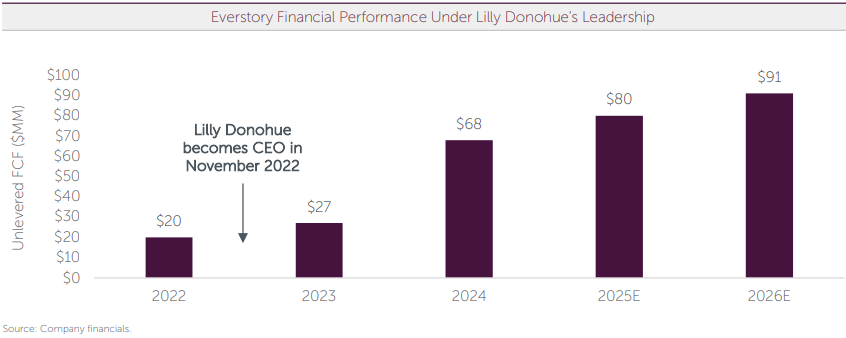
In the middle market, where management resources are limited and the bench of talent is thin (especially after a period of distress), transformative change starts and ends with the CEO. Selecting the right CEO has become a critical focus for Axar, and we’ve dedicated meaningful resources to develop deep expertise in leadership recruitment and alignment. Both Lilly and Mark embody this approach; leaders who have rebuilt or created culture, driven operational excellence, and in turn, delivered sustained business growth and strong financial performance.
One of the most interesting takeaways from the two discussions was the similarities in the content despite the context of a cemetery business in Orlando, FL and an insurance business in Des Moines, IA being completely different. Both sectors share structural durability, fragmented market share, and the potential for outsized returns when a balance sheet fix is paired with disciplined capital allocation and transformational leadership.
---
## 
## KEY FACTS AND OBSERVATIONS
### 1. The Axar Turnaround Playbook: People & Culture Central
Lilly Donohue stepped into Everstory amid liquidity pressure, a fully remote executive team, and total organizational drift. Her approach was phased: first observe, stabilize cash/liquidity (remove the immediate distress), and then reset leadership & culture. Rather than quick severance-driven cleanouts, she worked methodically to evaluate people, preserve institutional knowledge, and only then started to make changes. This deliberate cadence has allowed Everstory to attract the right talent, lift customer satisfaction, and expand margins while avoiding the pitfalls of “slash and burn” restructuring.
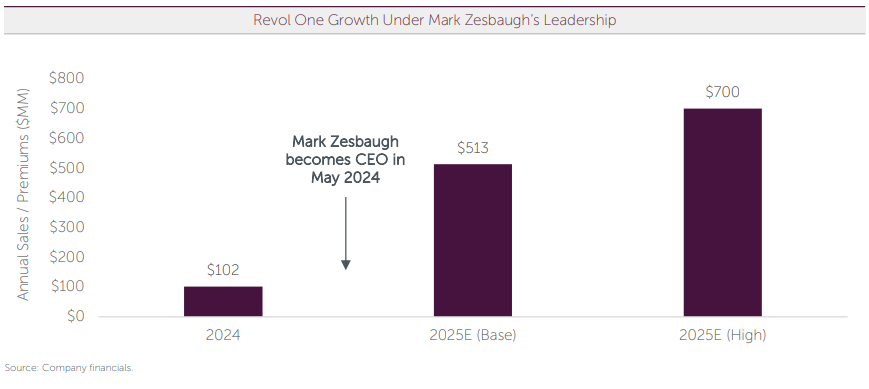
Similarly, Mark Zesbaugh at Revol One built culture from scratch. Mark started with a blank canvas after Axar acquired Pavonia out of receivership during which time the operations had been entirely outsourced. Mark emphasized trust, employee ownership – both of projects and of company equity – and speed (“cheetah speed,” in his words and now the company’s mascot). Revol One’s competitive edge is not just a product; it’s an entire culture that has attracted highly experienced senior talent from large incumbents into an exciting “startup” type environment.
### 2. Digital Transformation: Using Technology in Traditional Economy Businesses
At Everstory, the idea of digitizing the cemeteries, many of which are 100+ years old, sounds mundane. However, it has proven transformative. By moving from pencil-marked cards, paper contracts and manual collections to a digital platform, Everstory unlocked pricing power, reduced risk of double-selling, and freed staff to focus on their customer, not the paperwork. Today, 38% of company-wide inventory is digitized and on pace for 100% by the end of 2026. For an industry many think of as truly “old economy”, technology is creating both transformation and efficiency. At Revol One, distribution is the battleground for that business. The annuity market is ~$400 billion annually and Revol One aims for a 1% share position, which Mark feels confident he can achieve with this leadership team and distribution strategy. Through deep IMO (independent marketing organization) partnerships, many rooted in relationships built over decades, Revol One is accelerating agent adoption of its products. Crucially, it has aligned incentives by allowing distribution partners to invest directly in the company, creating unique buy-in that competitors cannot easily replicate.
### 3. Quality, Recurring Cash Flow driven by Long Term Investments in People
Both CEOs emphasize quality of cash flow. The quality of the cash flow is another way of emphasizing the durability of what’s being built compared to quick, non-sustainable wins or Hail Mary business strategies that distress companies often chase. Lilly tracks not only EBITDA but also customer reviews, employee turnover, and regulatory complaints. These are metrics that are ultimately influenced by the Everstory team. Lilly has invested the first 2+ years of her tenure as CEO in identifying the right people for the right roles at the company, and this has dramatically increased productivity and employee satisfaction. Everstory has achieved a Great Place to Work certification, an exceptionally high bar, based solely on anonymous employee feedback, an achievement unthinkable prior to her tenure. The improvement in the work environment has been realized even though headcount is dramatically lower and SG&A costs have been reduced by some 40%.
Mark, likewise, stresses that sustainable growth must be built on trust with regulators and trust with distribution partners, but, most importantly, trust with Revol One employees. Mark believes the single driving factor for Revol One’s success has been the quality of the leadership team he’s been able to attract. He’s attracted leaders from much larger, established companies, offering a unique opportunity to take on a larger, more entrepreneurial role, in an insurance industry known for bureaucracy and lack of innovation. Mark uses the development of the actuarial team at Revol One as an instructive case study. Actuaries are in incredibly high demand and very difficult to hire. Accordingly, the actuarial work was the last business function Revol One brought in-house, and as a result, a significant cost center. Mark identified and recruited an exceptionally strong Chief Actuary, and after months of courting, he agreed to join. Within 4 months of the hire, Revol One fully integrated all actuarial work in-house. The original timeline was 24 months. The Chief Actuary was empowered by Mark to recruit a team, the team was empowered to develop a project plan independently. This is a tangible example of investing in durable capability – strong human capital – which required months of searching, economic alignment and the buy-in of a shared goal. This investment in the team is in stark contrast to short-term expediency or maximizing short-term profit at the expense of long-term value creation.
## KEY TAKEAWAYS
- Successful Turnarounds are Cultural, Not Just Financial. Balance sheets can be restructured in quarters; rebuilding trust, leadership, and operating cadence takes years. Investors who ignore culture risk short-lived or limited recoveries. This was exemplified by Mark’s focus on building an entrepreneurial, ownership-driven culture, one where every employee feels empowered and personally invested in Revol One’s success. He also articulated a thoughtful leadership philosophy: praise in public, coach in private, pairing high expectations with genuine respect. A culture built on trust and accountability is essential to enduring success and that’s a value we share at Axar, one we continually strive to embody within our own organization. They create opportunity through complexity, opacity, and structural nuance.
- Fragmented, Durable Industries are Ripe for Transformation. Cemeteries and insurance both offer non-cyclical demand and entrenched market needs. While not the highest growth industries, they generate high cash flows at scale. However, both industries are dominated by slow-moving incumbents and limited adoption of technology. When an attractive “distressed” entry point in an attractive underlying company platform is paired with new leadership, execution, and operational oversight, they become fertile ground for potential outsized returns.
- Operational Edge Compounds Investment Edge. Digitizing cemetery records or accelerating agent onboarding may not make headlines, but these operational improvements drive increased cash flow, improve margins, and create competitive advantages in highly competitive industries. Mark found pain points in the sales process for insurance (lag in agent commission payments, lengthy onboarding processes, and “green screen” technology) and used technology to onboard agents quickly and economically align them with writing new business on the Revol One platform, a key engine of the company’s rapid growth.
- Speed Matters but Changes Need to be Calculated. Both CEOs emphasized the balance between moving fast and knowing when to wait. Lilly resisted removing underperformers for months until she fully assessed the situation and the people and had adequate time to develop a methodical strategy. Like a game of chess, she made calculated moves to find the right long-term people for the right positions. In so doing, she has reduced turnover, reduced the size of the executive team, and reduced costs while significantly improving employee satisfaction and customer experience. Similarly, Mark acknowledged his biggest regret at Revol One so far was one of timing; when it was evident one of his hires was not working out he did not move fast enough to get the wrong person out and the right person in. His rationale and regret is sound; for the individual in the wrong seat, the change is necessary as they can never be successful or satisfied in such a situation, and the delay only prolongs the search for the right individual. Ultimately, this is a delay in progress against the overarching business plan. The common thread: in distressed situations, leadership change is inevitable, but judgment about when to move is as important as how.
- Turnarounds Start after the Deleveraging. Turnarounds don’t simply stop after a deleveraging event. Everstory has developed a disciplined acquisition playbook featuring process-driven sourcing, rigorous underwriting, and defined metrics to seamlessly integrate even single-site cemetery acquisitions. Lilly emphasized the importance of listening and observing when creating the turnaround playbook, using data to identify key levers before implementing structural changes. Revol One has a product and distribution playbook designed to bring six new insurance products to market annually, whereas larger incumbents would be content with one. For both, scale is less about financial engineering and more about repeatable, customized, and thoughtful execution. Success is tied to a tailored strategy.
- Incentives Drive Alignment. Everstory raised its minimum wage to $15/hour across all states, which was financed by restructuring sales commissions. This was an unusual step in a distressed setting, but Lilly recognized the importance of the rank-and-file employee as a driver of efficiency and re-enforcement of culture. Revol One offered equity to distribution partners and ownership stakes to employees. In both cases, creating economic alignment was a cultural commitment to stakeholders.
- Distress Creates Optionality. Acquired during periods of market dislocation, Everstory and Revol One represent scarce, high-conviction platforms that have attracted exceptional CEO talent in Lilly and Mark. Everstory was acquired through distressed debt and a rights offering, Revol One through defaulted debt and out of receivership. What began as defensive “rescue capital” opportunities have evolved into growth platforms poised to generate significant returns. This underscores the core Axar investment philosophy: distress is not an endpoint but an opportunistic entry point to long-term optionality.
## CONCLUSION
Distressed investing may start in the balance sheet, but its success will ultimately depend on the operating engine of a business; in the middle market, that engine is most often the people. The engine’s ignition is the CEO. The balance sheet stress almost always creates disruption within the operation, strong employees often exit, and a potential cultural and leadership vacuum may emerge. Everstory and Revol One prove that culture, leadership, and execution, not financial leverage and financial engineering, are the true drivers of long-term value creation. By focusing on digital adoption, distribution, and aligned economic incentives, both companies are building resilient franchises. For Axar, these recent conversations with two of our portfolio company CEOs reinforced that successful distressed investing must combine thoughtful, deliberate balance sheet restructuring with an operational capability to recruit “level 5” leaders to take the helm of a distressed enterprise. The ability to combine investment underwriting, debt restructuring, bankruptcy expertise and other legal maneuvering with operational reinvention and refinement is where Axar differentiates itself. Our ability to recruit and attract talented CEOs to drive successful turnarounds is a key element of our strategy. We’re excited to see the continued growth of Revol One and Everstory under these incredibly talented CEOs.
## DISCLAIMER
Axar Capital Management LP (“Axar”) has prepared this memo (“Memo”) for informational purposes only. This Memo is not intended to constitute legal, tax, financial, or investment advice.
While all the information contained in this Memo is believed to be accurate, no guarantee, representation or warranty is made as to the accuracy, completeness or fairness of the information contained in this Memo. Certain information in this Memo reflects the current opinions of Axar which may prove to be incorrect and are subject to change. Certain information contained in this Memo constitutes “forward-looking statements,” which can be identified by the use of forward-looking terminology such as “may,” “will,” “should,” “expect,” “anticipate,” “target,” “project,” “estimate,” “intend,” “continue,” or “believe” or the negatives thereof or other variations thereon or comparable terminology. Due to various risks and uncertainties, actual events or results may differ materially from those reflected or contemplated in such forward-looking statements.
Each recipient further agrees that it will (i) not copy, reproduce, or distribute this Memo, in whole or in part, to any person or entity; (ii) keep permanently confidential all information contained herein that is not already public; and (iii) use this document solely for the purpose set forth in the first paragraph above.
Portfolio companies discussed do not reflect all investments made by Axar. Portfolio company executives were not compensated for their contributions herein. Executives are not affiliated with Axar.
Topics:
[Insights](https://insights.axarcapital.com/topic/insights)
Don't forget to share this post:
## Related Articles
### [.png?width=2400&height=1257&name=73618-%20Axar-%20Blog%20%2310%20-%20derived%20from%20The%20Chopping%20Block%20-%20Feature%20Image%20(1).png) The Nucleus: Why a Failed Balance Sheet Doesn’t Mean a Failed Business September 24th, 2026|8 min read](https://insights.axarcapital.com/the-nucleus-why-a-failed-balance-sheet-doesnt-mean-a-failed-business)
### [ The AI Value Gap August 21st, 2026|8 min read](https://insights.axarcapital.com/the-ai-value-gap)
### [ Switching Costs, The Moat Customers Don't Notice They're Trapped By August 19th, 2026|8 min read](https://insights.axarcapital.com/switching-costs-the-moat-customers-dont-notice)
### [ The Compounders Built on Overlooked Balance Sheets August 5th, 2026|8 min read](https://insights.axarcapital.com/compounders-built-on-overlooked-balance-sheets)
### [.png?width=1200&height=628&name=Untitled%20design%20(18).png) 2026 2H Market Outlook – the “Velvet Rope Market” July 9th, 2026|8 min read](https://insights.axarcapital.com/2026-2h-market-outlook-velvet-rope-market)
### [ Active vs. Passive in Distressed Credit: Why Showing Up at the Table Changes the Outcome June 18th, 2026|8 min read](https://insights.axarcapital.com/active-vs-passive-distressed-credit)
### [ The PE Overhang: Why Sponsors Are Stuck and What It Means for Credit June 3rd, 2026|8 min read](https://insights.axarcapital.com/private-equity-overhang-dpi-credit-markets)
### [ What Happens to a Company After a Liability Management Exercise May 20th, 2026|8 min read](https://insights.axarcapital.com/what-happens-after-liability-management-exercise)
### [ CLOs Own 75% of the Leveraged Loan Market. Here's Why That Creates Pricing Anomalies. May 6th, 2026|8 min read](https://insights.axarcapital.com/clo-overcollateralization-leveraged-loan-pricing-anomalies)
### [ The Chopping Block: The Anatomy of a Great Distressed Investment April 24th, 2026|8 min read](https://insights.axarcapital.com/the-chopping-block-the-anatomy-of-a-great-distressed-investment)
### [ The Lenders Who Left: How a Decade of Easy Money Quietly Reshaped the Distressed Credit Landscape April 22nd, 2026|8 min read](https://insights.axarcapital.com/the-lenders-who-left-distressed-credit-landscape)
### [ Credit Quality in Decline — Why the Middle Market Is Axar's Hunting Ground April 10th, 2026|8 min read](https://insights.axarcapital.com/credit-quality-in-decline)
### [ From Grave Concerns to Growth: The Everstory Revival March 30th, 2026|8 min read](https://insights.axarcapital.com/from-grave-concerns-to-growth-the-everstory-revival)
### [.jpg?width=360&height=203&name=imgi_13_648847-img_bars%20(1).jpg) 2026 Market Outlook January 19th, 2026|8 min read](https://insights.axarcapital.com/2026-market-outlook)
### [ Credit Unbound IV: Capitalizing on a Shifting Opportunity Set October 27th, 2025|8 min read](https://insights.axarcapital.com/credit-unbound-part-4)
### [ Credit Unbound III: Capitalizing on a Shifting Opportunity Set September 15th, 2025|8 min read](https://insights.axarcapital.com/credit-unbound-part-3)
### [ Credit Unbound II: Capitalizing on a Shifting Opportunity Set September 8th, 2025|8 min read](https://insights.axarcapital.com/credit-unbound-part-2)
### [ Credit Unbound I: Capitalizing on a Shifting Opportunity Set September 1st, 2025|8 min read](https://insights.axarcapital.com/credit-unbound-part-1)
### [ The Chopping Block: Chipping Away at the LME Opportunity June 20th, 2025|8 min read](https://insights.axarcapital.com/the-chopping-block)
### [ When The Music Stops March 3rd, 2025|8 min read](https://insights.axarcapital.com/when-the-music-stops)
### [ Cashing In On Cash Now October 15th, 2024|8 min read](https://insights.axarcapital.com/cashing-in-on-cash-now)
### [ Jailbreaking Value July 1st, 2024|8 min read](https://insights.axarcapital.com/jailbreaking-value)
- [Home](https://axarcapital.com/)
- [About](https://axarcapital.com/about)
- [Our Values](https://axarcapital.com/our-values)
- [Approach](https://axarcapital.com/approach)
- [Team](https://axarcapital.com/team)
- [Careers](https://axarcapital.com/careers)
- [News & Insights](https://insights.axarcapital.com/)
- [Contact](https://axarcapital.com/contact)
- [Login](https://access.hedgeserv.com/wauth/login)
© 2026 Axar Capital Management LP. All Rights Reserved.
Privacy Policy. Terms Of Service.
```json
{
"@context" : "https://schema.org",
"@type" : "BlogPosting",
"author" : {
"@type" : "Person",
"name" : "Axar Capital Management LP",
"url" : "https://insights.axarcapital.com/author/axar-capital-management-lp"
},
"dateModified" : "2026-04-06T18:53:05.905Z",
"datePublished" : "2025-11-11T15:00:00.000Z",
"headline" : "The Chopping Block: Building Culture- How Two CEOs Turned Distress into Durable Growth",
"image" : [ "https://insights.axarcapital.com/hubfs/imgi_12_648851-chopping_wood.png" ],
"mainEntityOfPage" : {
"@id" : "https://insights.axarcapital.com/the-chopping-block-building-culture-how-two-ceos-turned-distress-into-durable-growth",
"@type" : "WebPage"
},
"publisher" : {
"@type" : "Organization",
"logo" : {
"@type" : "ImageObject",
"url" : "https://insights.axarcapital.com/hubfs/Logo/Axar_logo.png"
}
}
}
```